What Is an Enterprise Data Deletion Application?
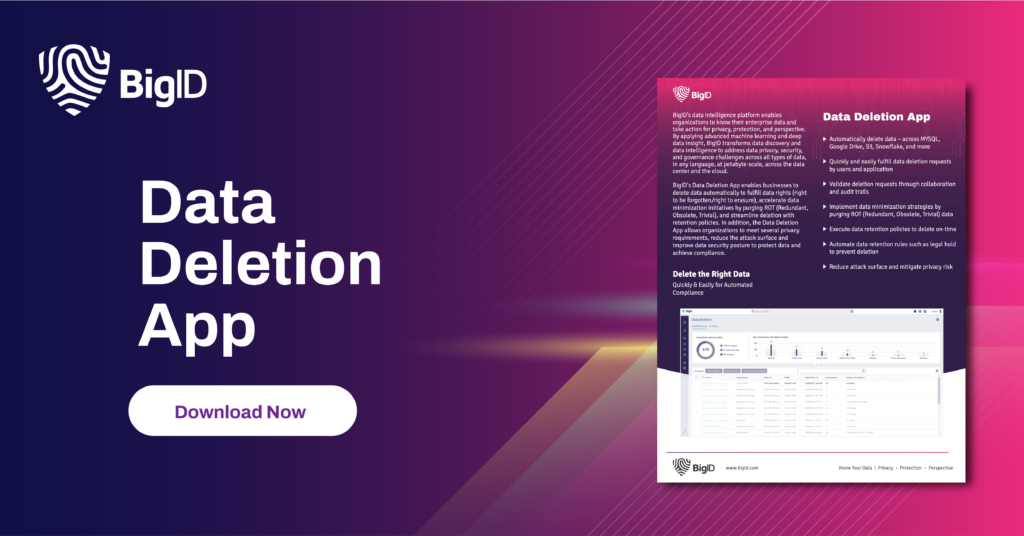
An enterprise data deletion application helps organizations identify and delete personal, sensitive, or unnecessary data across their data stores to support privacy compliance, data minimization, and risk reduction. BigID’s Data Deletion App automates deletion workflows across structured and unstructured data sources, supports data rights requests and retention policies, and helps organizations remove redundant, obsolete, and trivial (ROT) data while maintaining controls for legal holds and audit requirements.
Why Is Enterprise Data Deletion Important?
One of the trickiest steps of data lifecycle management is how to address it end-to-end, from collection all the way to destruction. That’s why we’re Introducing the data deletion app: a new way to easily streamline data rights fulfillment, data minimization, and more. Customers can now use BigID’s native data deletion capabilities that make it easy for organizations to quickly and effectively delete personal and sensitive data across their data stores – including Snowflake, AWS S3, mySQL, Google Drive, Teradata, and more.
Data deletion is typically an ‘I’ll do that later’ project – but as data volume explodes, it’s more critical than ever to be able to delete the right data at the right time – from the right systems and storage. BigID’s data deletion app changes the game, enabling data lifecycle management in a single platform, so that companies can minimize their attack surface, achieve compliance, and improve their data hygiene.
In addition, this new application allows customers to meet several data privacy and protection regulatory requirements, reduce attack surfaces, and improve data security posture while taking the necessary steps to protect their data and achieve compliance.
What Can Organizations Do With BigID’s Data Deletion App?
With BigID’s data deletion capabilities, organizations can:
- Accelerate data minimization initiatives by purging any duplicate, similar, and redundant data
- Reduce cloud data risk by reducing data before a cloud migration or digital transformation
- Fulfill data deletion requests with integrated end-to-end data rights management
- Initiate data deletion workflows based on data retention policies and automatically address policy violations
Learn more about the app – and get a demo to see BigID’s data deletion in action.
Frequently Asked Questions About Enterprise Data Deletion
What types of data can an enterprise data deletion application delete?
An enterprise data deletion application can help organizations delete personal, sensitive, redundant, obsolete, and unnecessary data across supported data sources. BigID’s Data Deletion App supports deletion across various data stores, including cloud platforms, databases, and file-sharing services.
How does enterprise data deletion support regulatory compliance?
Enterprise data deletion helps organizations fulfill data subject deletion requests and apply data retention policies. These practices can support compliance with privacy regulations such as the GDPR and CCPA, where applicable. Organizations must also account for legal holds and other obligations that may restrict deletion.
Can organizations automate enterprise data deletion?
Yes. Enterprise data deletion applications can automate deletion workflows based on defined policies and data rights requests. BigID’s Data Deletion App helps organizations streamline these processes, reducing reliance on manual deletion tasks and supporting consistent execution across data stores.
How does data deletion reduce security risk?
Deleting unnecessary, redundant, or outdated data reduces the amount of information an organization needs to protect. This can shrink its potential attack surface and reduce exposure if a security incident occurs. Organizations should first identify the data they can safely delete and account for retention requirements.
Can BigID delete data across cloud and on-premises environments?
BigID provides data discovery and deletion capabilities across supported data sources, helping organizations manage data across diverse environments. The specific sources available depend on connector support and configuration. Organizations should confirm that their required systems and repositories are supported before implementing deletion workflows.
Author