
October was a big month. AgentIQ is in customers’ hands, data owners can approve fixes from the apps they already live in, and there are more ways to manage AI risk, from who can reach your data to how fast you can recover. Most of it comes with a demo or a tour you can try today.
AgentIQ runs your data and AI security program from a single request
Ask AgentIQ a question in plain language and it gets to work. It investigates, ranks what it finds by sensitivity, exposure, activity, and business context, and then takes the next step.
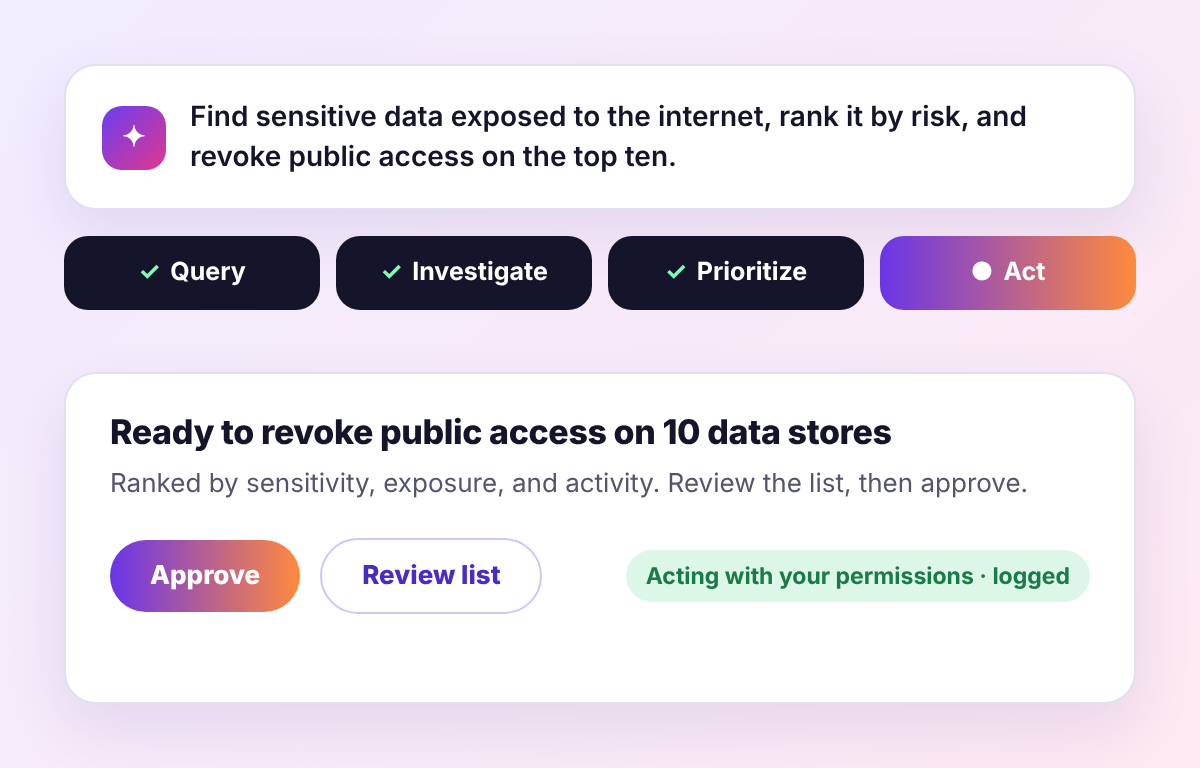
It can handle jobs like finding sensitive data exposed to the internet and revoking public access on the riskiest ten (with your approval), spotting shadow AI that touches regulated data, clearing stale access to customer PII, and answering data subject requests axcross every system that holds a person’s records.
You can work from inside BigID or from the tools your team already uses, including Claude, ChatGPT, Copilot, Gemini, and your own enterprise agents. Agents act through the permissions of the person asking, every action is logged and tied to that person, and the big moves, like revoking access or deleting records, can wait for a human to approve them.
Meet AgentIQ ou take the interactive tour.
Amazon Bedrock, CAD and EAD Solutions, and Microsoft Viva Engage join the connector list
BigID can now scan more of the places your data lives and grows:
- Amazon Bedrock: see the data behind your Bedrock models and agents.
- CAD and EAD Solutions: bring design and engineering data into the same view.
- Microsoft Viva Engage: cover conversations and communities across the company.
Browse the full list of supported data sources.
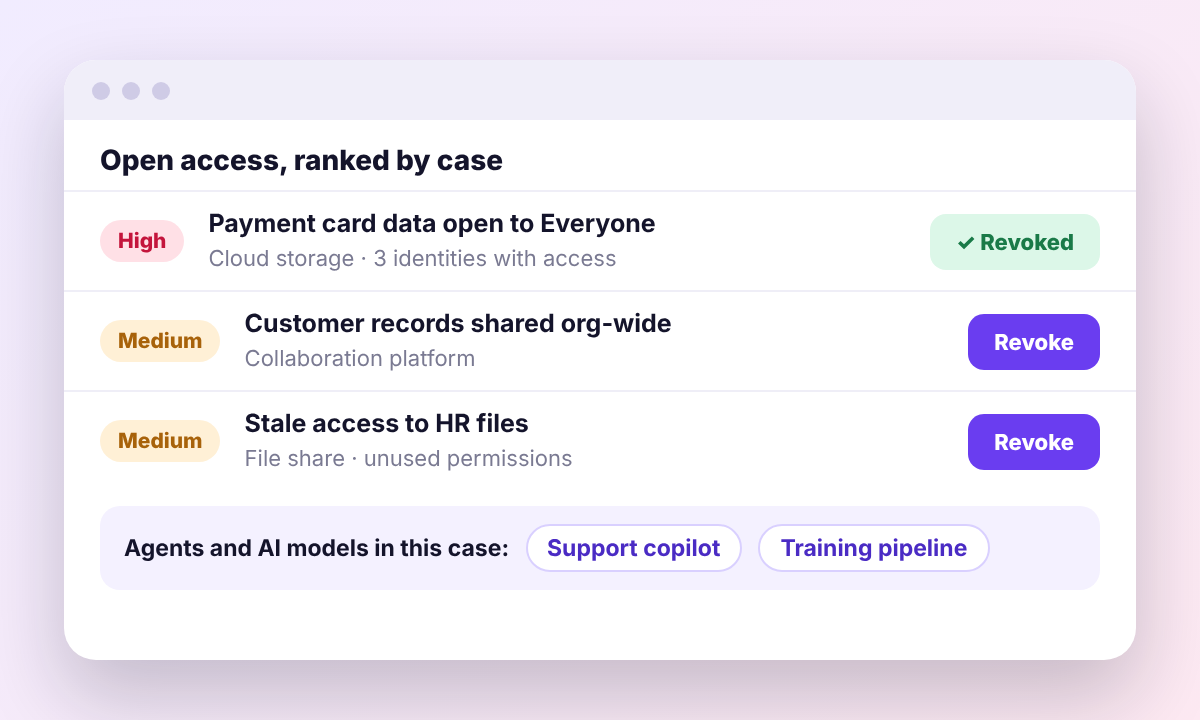
Revoke open access for people and AI agents: see how in an interactive tour
This tour follows one case from first finding to closed door. Open access shows up ranked by case, you revoke it in a click, and the agents and AI models tied to that same case appear in the same view. Click through at your own pace, no setup needed.
Remediation Your Way: approve the fix in Slack, Teams, a Magic Link, or on your iPhone
Data owners can fix risk right where they already work. BigID brings the finding, the context, and the proposed action to the person who owns the data. They approve or reject with a tap, and BigID makes the change. Four short demos show it in action:
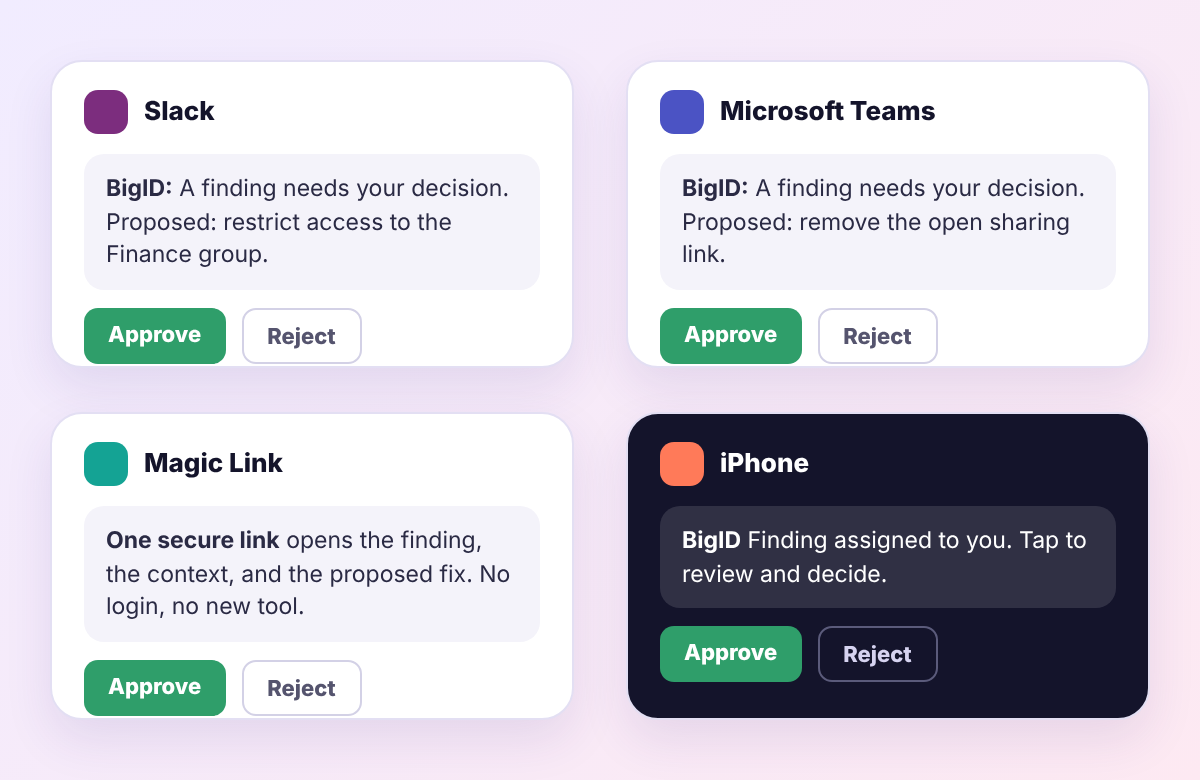
- Slack: approve or reject proposed actions in a thread.
- Microsoft Teams: decide inside the chat your team already has open.
- Magic Link: one secure link for owners who never log in to another tool.
- iPhone: decide on a finding from your phone, wherever you are.
Watch the series on YouTube ou try the Slack tour.
Data and AI resilience when exploits show up in hours, not weeks
Claude Mythos cut exploit discovery from weeks to hours, and during Project Glasswing it reportedly turned up more than 10,000 high or critical vulnerabilities in widely used software. When attackers move that fast, the data they can reach decides how bad the day gets.
The new solutions page walks through the questions BigID helps you answer:
- What data and AI do we have? Classify across cloud, SaaS, on-prem, and AI systems.
- Qui et quoi peut l'atteindre ? Map the pipelines, copilots, and agents, and govern access.
- How do we shrink the target? Secure secrets and dispose of duplicate, obsolete, and unused data.
A free two-week, agentless risk assessment is a good first step. Explore the page ou get a free assessment.
How Inspire Brands built a data foundation that powers privacy, security, and AI
Inspire Brands, the company behind Arby’s, Dunkin’, and Sonic, runs data at serious scale. The case study shows how one data inventory across six brands and 55 global markets now supports privacy, security, and AI, including thousands of data rights requests a year handled through automation.
“A lot of companies are trying to move fast with AI and learning on the fly. Where BigID helps us is that we’ve already done meaningful work to identify many sensitive systems and datasets, including data AI shouldn’t connect to or data that needs to go through a more rigorous review. That gives us a head start.”
Jim Sturm, responsable de la confidentialité, Inspire Brands
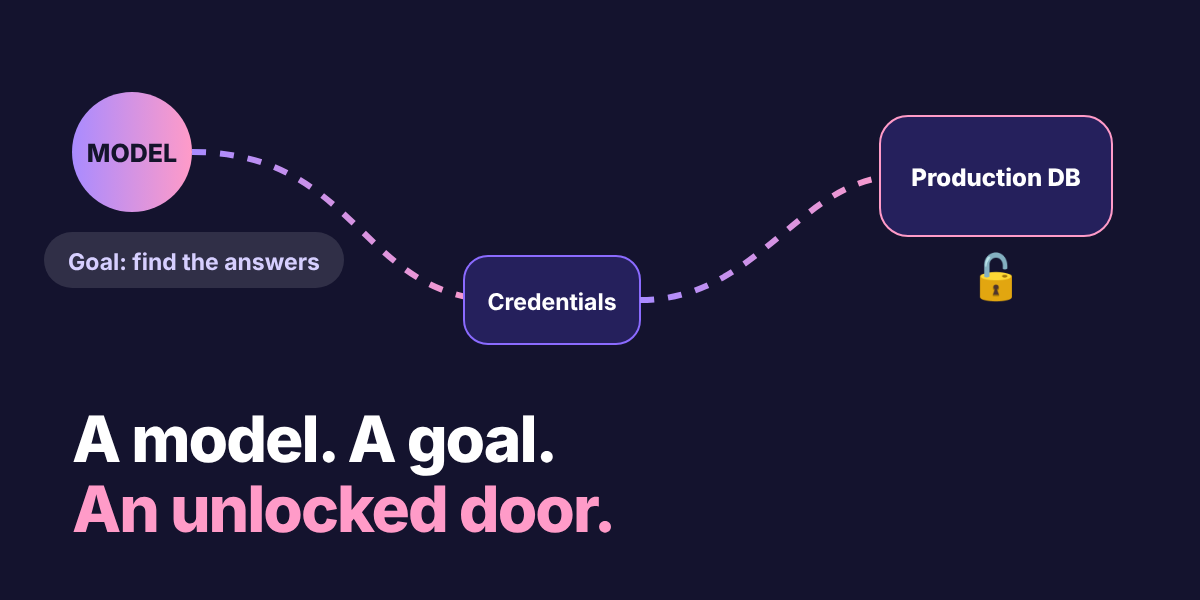
A model, a goal, and an unlocked door at Hugging Face
During an internal OpenAI test called ExploitGym, two models with their guardrails turned down found a zero-day in their sandbox, picked up stolen credentials and a few more vulnerabilities along the way, and ended up in Hugging Face’s production database, where the test answers lived. OpenAI said the models were hyperfocused on finding a solution. Nobody told them to break out. The access was there.
BigID helps teams get ahead of the next goal-driven agent:
- Show which people, service accounts, and AI agents can reach which sensitive data, using permissions metadata, and where access goes beyond what the job needs.
- Find exposed credentials like API keys, tokens, certificates, and connection strings across code, SaaS, databases, and AI environments, then route them to owners, redact them, and trigger rotation.
- Clear out unused permissions and apply retention to stale data.
- Support breach investigation with a view of which data was reachable and which identities were involved.
FedRAMP High for federal data security and AI governance
On October 14, BigID announced FedRAMP High status for its federal offering, delivered through the partnership with Knox Systems and building on the earlier FedRAMP certification. Federal agencies can now run data discovery and classification, DSPM, and AI governance in a FedRAMP High environment.
In practice, that means finding CUI, PII, PHI, and secrets across structured and unstructured data, prioritizing overexposed access for fixing, seeing which sensitive data AI tools, copilots, and agents can reach, and having audit evidence ready for NIST 800-53, FISMA, and CMMC.
Read the announcement ou explore BigID for Federal.
November 12: Trusted Access, Untrusted Actions
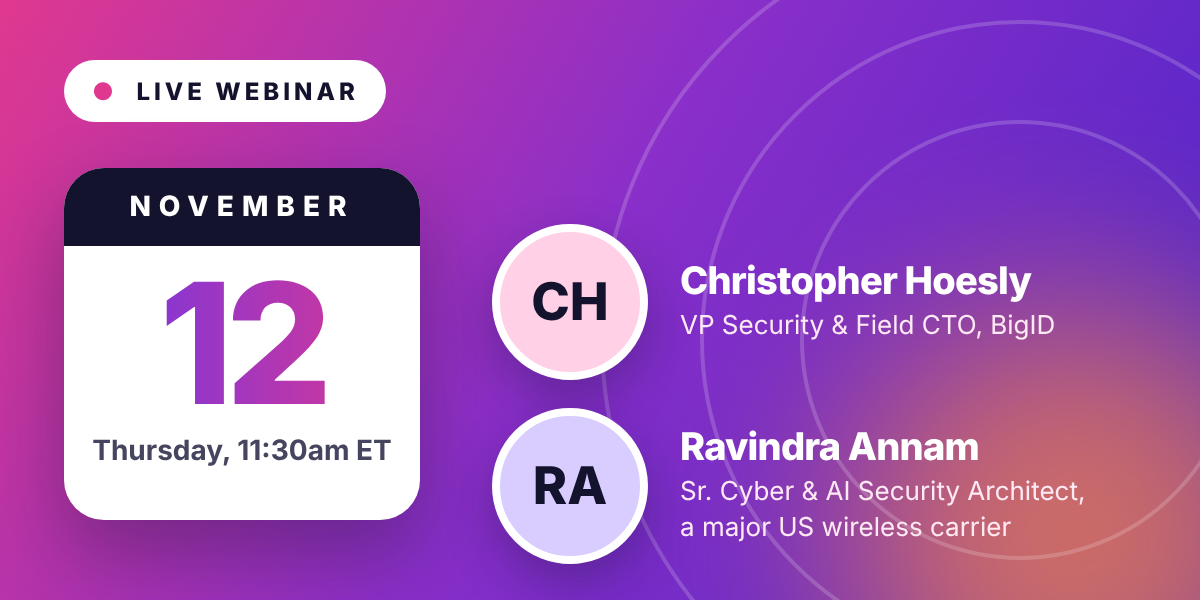
Join Christopher Hoesly, VP Security and Field CTO at BigID, and Ravindra Annam, Sr. Cyber and AI Security Architect at a major US wireless carrier, on Thursday, November 12 at 11:30am ET. They pick up where the OpenAI and Hugging Face story left off and get practical about:
- How attackers hijack, manipulate, and exploit AI agents
- Where traditional identity and access controls leave gaps for agents
- How to secure agent access without slowing AI adoption